Introduction
Thinking about investing in Dubai property? You are not alone. World events, a strong government push for stability, and some of the highest rental returns on the planet make buying real estate in Dubai a popular choice in 2026.
Here is a fact that grabs attention. Gross rental yields in Dubai average around 6.7% to 7% for apartments. That is roughly double what you would earn in mature markets like London or New York. Sands of Wealth confirms this gap is still wide in 2026. Industry experts at Cushman & Wakefield also expect prices and rents to grow another 8% to 12% this year. That forecast comes from Global Property Guide.
Still, many would-be buyers hold back. You have heard the stories. Confusing laws. Unclear fees. And the big question: can you trust the people you are dealing with? A lack of transparency and honest guidance stops smart investors from taking the next step.
That is why this guide exists. We cut through the noise. Whether you want to buy real estate in Dubai as a rental investment, a second home, or part of a larger portfolio, you need a clear roadmap. This article walks you through the process step by step, backed by current data and expert insight.
You already know the opportunity is real. Now you need to know how to act on it safely.
If you are ready to move forward with confidence, take the next step today.
You can book a FREE Dubai Real Estate Consultation with Ayaz Salman by clicking here: Free Consultation. This is a one-on-one chat where you can ask anything about the market.
Also, if you want a broader look at the full landscape first, check out our complete guide on how to buy property in Dubai in 2026. It covers locations, costs, and legal steps in more detail.
Why Invest in Dubai Real Estate in 2026?
So why should you put your money into Dubai property this year? The numbers speak clearly. Gross rental yields for apartments average around 6.7% to 7% . That is roughly double what you would earn in London or New York. Sands of Wealth confirms this gap is still wide in 2026. And experts expect prices and rents to grow another 8% to 12% this year. That forecast comes from Cushman & Wakefield, via Global Property Guide. Those are strong numbers.
Beyond the returns, Dubai gives you advantages that other markets simply do not offer.
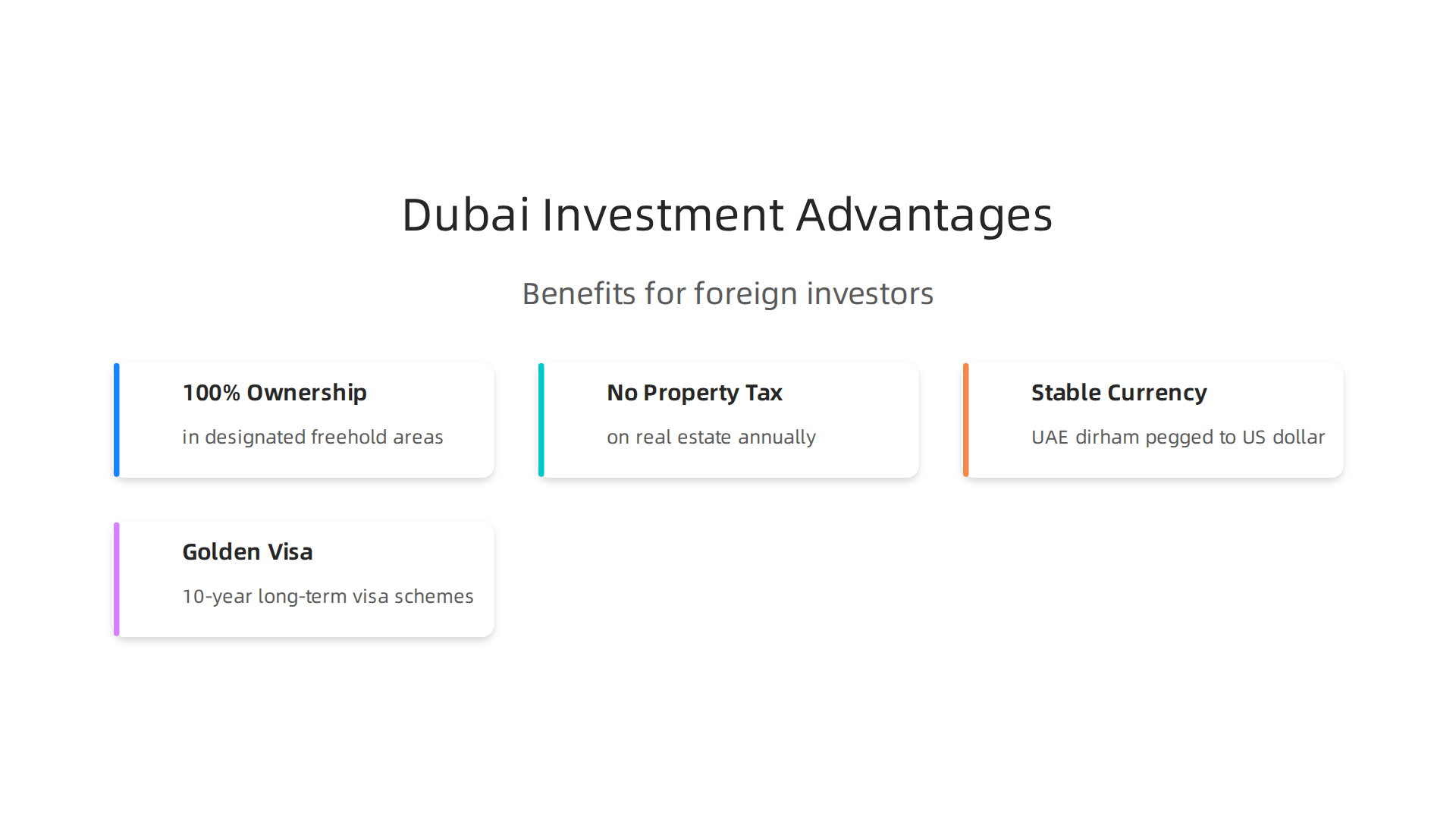
As a foreign buyer, you can own 100% of the property in designated freehold areas. There is no annual property tax on real estate. And because the UAE dirham is pegged to the US dollar, your investment is safe from currency ups and downs. The government also offers long-term visa schemes like the 10-year Golden Visa. These programs give you stability and a real reason to make Dubai your home base.
Rental yields are the real headline here. Even for standard one-bedroom apartments, gross yields range from 5.11% to 5.86% depending on location and size, according to GuestReady. For comparison, yields in London barely cross 3%. That means your money works twice as hard in Dubai. If you are looking for areas with the highest potential, areas like JLT, Dubai Marina, and JVC are worth exploring. Check out our detailed guide on JLT apartments for sale in 2026 for more specific numbers.
Investing in Dubai real estate in 2026 is not just about chasing high yields. It is about safety, simplicity, and long-term confidence. The rules are clear, the taxes are low, and the market keeps growing.
Ready to take the next step? You can book a FREE Dubai Real Estate Consultation with Ayaz Salman to discuss your goals. Click here: Free Consultation. It is a one-on-one chat where you can ask anything about the market.
Understanding Dubai’s Property Market Dynamics
Before you start buying real estate in Dubai, it helps to know how the market actually works.
That way, you avoid surprises and make smart choices.
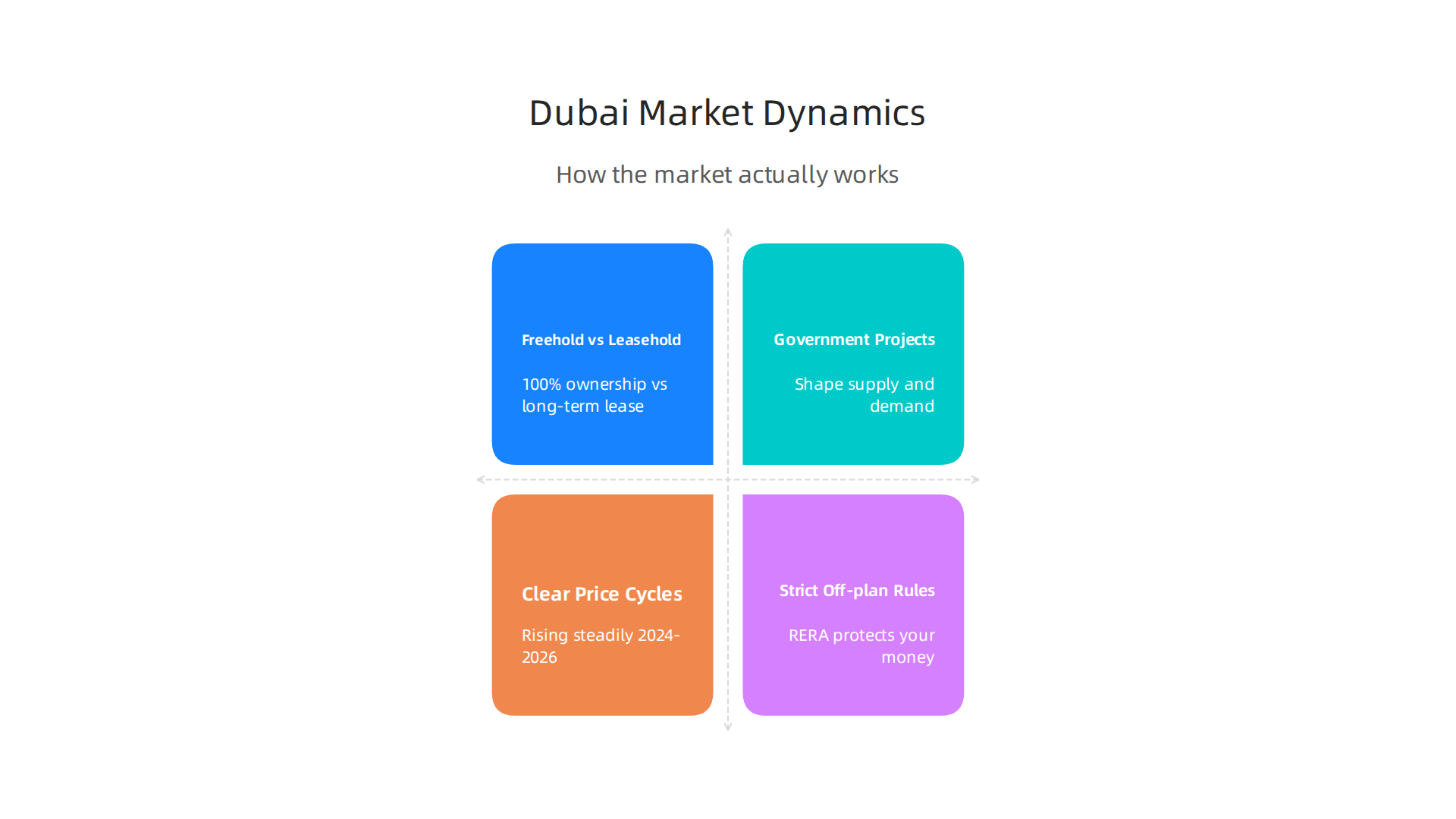
First, you need to understand the difference between freehold and leasehold zones. In freehold areas, foreign buyers can own the property 100% with full rights. Popular freehold zones include Dubai Marina, Palm Jumeirah, and Downtown Dubai. These are the areas where most investors focus. In leasehold areas, you get a long-term lease instead of full ownership. For a deeper look at specific areas, check out our guide on the Dubai real estate market in 2026.
Second, supply and demand in Dubai are heavily shaped by government projects. When the government builds new infrastructure like the Expo City expansion or new metro lines, property values in those areas often rise. These projects create jobs and bring more people to the city, which boosts demand for housing. So keeping an eye on upcoming developments can help you pick the right location.
Third, the market has clear price cycles. After a correction in 2020 and 2021, prices have been rising steadily from 2024 through 2026. This is good news if you are planning to buy real estate in Dubai now, because the trend is upward. But cycles can shift, so timing matters.
Also, if you are looking at off-plan properties, know that regulations are strict. Developers must follow rules set by the Real Estate Regulatory Authority (RERA), and sales cannot start until the developer has registered the project and set up an escrow account. This protects your money. You can read more about RERA developer obligations for off-plan projects in Dubai to understand the safeguards.
The bottom line? Understanding these dynamics helps you invest in real estate Dubai with confidence. You know where to look, when to buy, and how the system protects you.
Ready to put this knowledge into action? You can book a FREE Dubai Real Estate Consultation with Ayaz Salman. He will help you match these market dynamics with your personal goals. Click here: Free Consultation. It is a one-on-one chat with no pressure, just honest advice.
Legal Essentials: RERA, DLD, and Ownership Types
Now that you understand how Dubai’s market moves, let’s talk about the legal side. This part matters a lot when you are buying real estate in Dubai. The rules protect you, but only if you know them.
Two main bodies oversee everything: the Real Estate Regulatory Authority (RERA) and the Dubai Land Department (DLD). RERA sets the rules for developers and agents. DLD handles property registration and transfers. When you work with a licensed agent or a registered developer, your money is safer. For example, off-plan sales cannot start until a developer registers the project and sets up an escrow account. You can see the full list of RERA developer obligations for off-plan projects in Dubai to understand what must happen before you pay a single dirham.
Freehold vs. Leasehold
Here is the big question: can you own the land? In Dubai, it depends on the zone.
Freehold zones let foreign buyers own the property 100%. This includes the land and the building. Popular freehold areas include Dubai Marina, Palm Jumeirah, and Downtown Dubai. If you want to buy real estate in Dubai as a non-UAE resident, freehold is your best bet.
Leasehold zones give you a long-term lease, often 99 years, renewable. You own the building but not the land underneath. This can still be a good option, especially if you find the right location and price.
For a deeper look at the top freehold areas, read our guide on Dubai real estate investment in 2026.
Key Documents You Will Sign
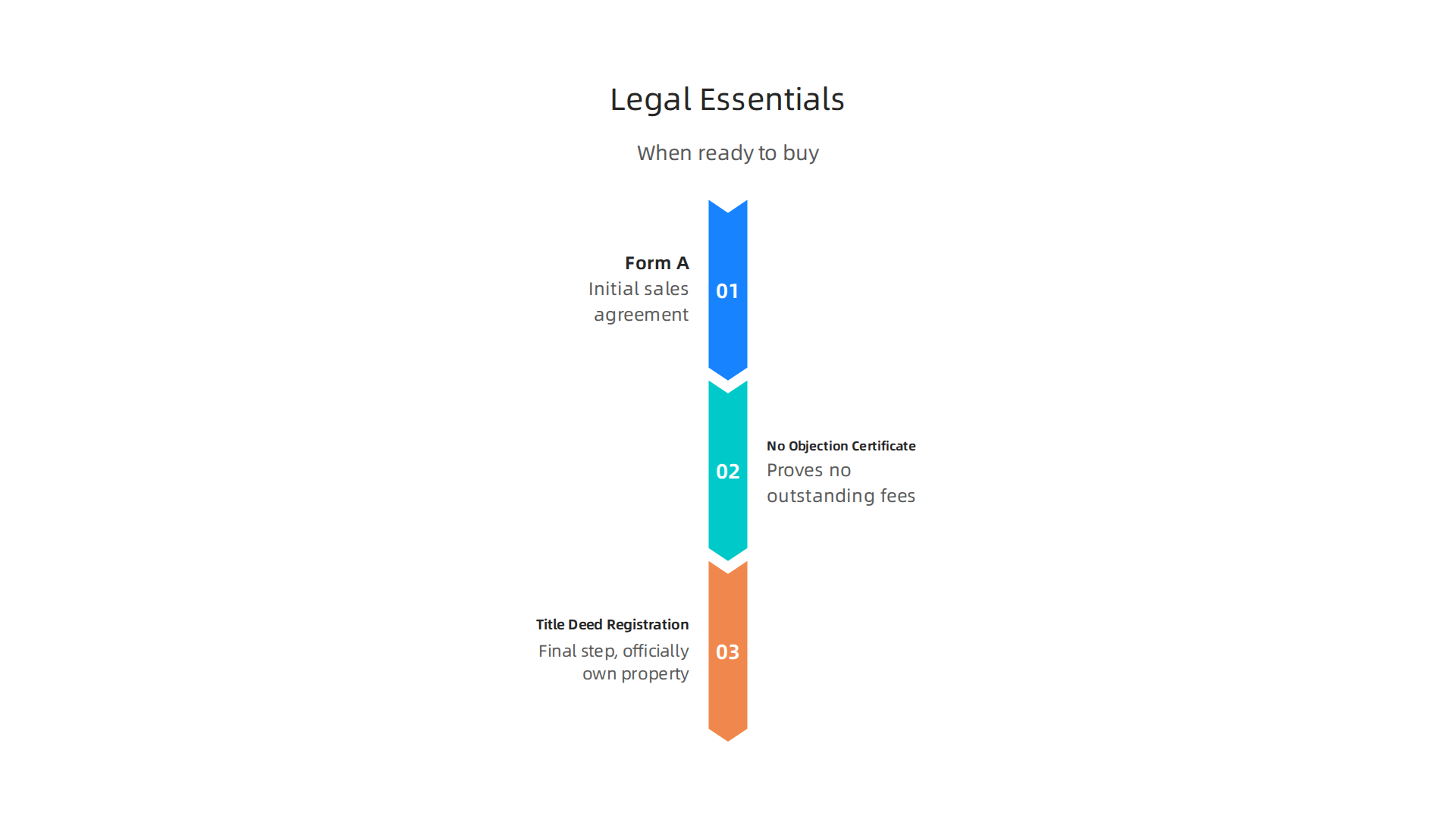
When you are ready to buy property in Dubai, you will need three documents:
-
Form A (Memorandum of Understanding): This is the initial sales agreement between buyer and seller. It lists the price, payment terms, and conditions. Both parties sign it before moving forward.
-
No Objection Certificate (NOC): The developer or current owner must provide this. It proves there are no outstanding fees or disputes on the property. Without it, the sale cannot happen.
-
Title Deed Registration: This is the final step. You go to the DLD, pay the transfer fee (usually 4% of the property price), and get the Title Deed in your name. That is when you officially own the property.
The whole process is straightforward if you follow these steps. And having a trusted advisor makes it even smoother.
Are you ready to start your journey? You can book a FREE Dubai Real Estate Consultation with Ayaz Salman. He will walk you through every document and help you avoid legal pitfalls. Click here: Free Consultation. No pressure, just practical advice for your situation.
Step-by-Step Process to Buying Property in Dubai
You already know the legal rules and the documents involved. Now let us walk through the actual steps. When you buy real estate in Dubai, the process follows a clear path.
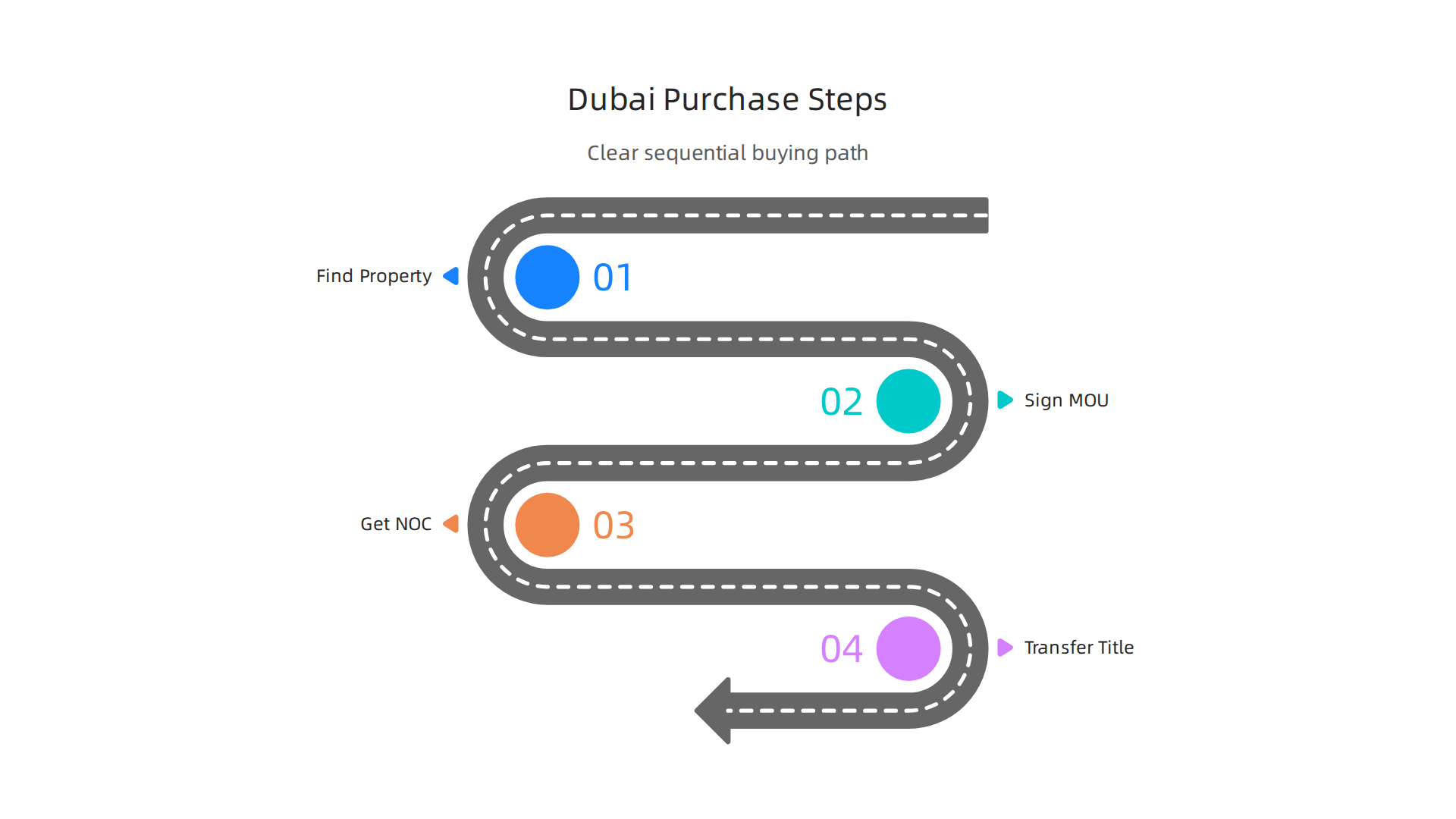
Each step has a purpose. Here is how it works in 2026.
Step 1: Find Your Property and Negotiate
Start by looking at listings online or working with a trusted agent. Focus on areas that match your budget and goals. If you are an expat, stick to freehold zones like Dubai Marina or JLT.
Once you find a place you like, make an offer. The seller can accept, reject, or counter. Most negotiations happen within a few days. Do not rush. Take your time to compare prices.
Step 2: Sign the Memorandum of Understanding (Form A)
This is the official sales agreement. You and the seller sign the Form A from the Dubai Land Department. It lists the final price, payment schedule, and any conditions. You usually pay a deposit of 10% of the purchase price at this stage. This locks the deal for both sides.
Step 3: Get the No Objection Certificate (NOC)
The developer or the current owner must provide an NOC. This paper says there are no unpaid service charges or disputes on the property. Without an NOC, the transfer cannot happen. The whole process usually takes 4 to 6 weeks for a ready property, as noted in this buyer’s guide on duration.
Step 4: Transfer the Title at the DLD
This is the big moment. You go to the Dubai Land Department or use their online portal. Both parties attend, or you can authorize an attorney. You pay the 4% DLD transfer fee plus a registration fee of AED 4,000 or more depending on the property value. After the payment, the Title Deed is issued in your name. You officially own the property.
Total Fees to Expect
When you buy real estate in Dubai, the costs go beyond the sale price. Here is what to budget for according to current market rates in 2026:
| Fee | Percentage or Amount |
|---|---|
| DLD transfer fee | 4% of property price |
| Agent commission | 2% of property price plus 5% VAT, as reported in this 2026 fee guide |
| Registration fee | AED 4,000 + |
| Admin charges | AED 500 to AED 2,000 |
If you are buying off-plan, the fees may differ slightly. Check the UAE off-plan buying guide from 2026 for a full breakdown of costs.
Make It Easier with the Right Help
The steps sound simple, but each one has details that can trip you up.

A small mistake on the NOC or a missed admin fee can delay your deal for weeks. That is why working with a licensed agent matters so much. To learn more about choosing the right professional, read our guide on how to avoid costly mistakes with a real estate brokerage in Dubai in 2026.
Are you ready to move forward without the guesswork? You can book a FREE Dubai Real Estate Consultation with Ayaz Salman. He will guide you through every step and help you avoid hidden fees and legal delays. Click here: Free Consultation. No strings attached, just clear advice for your situation.
Financing Your Purchase: Mortgages and Payment Plans
Now that you know the steps and costs, let’s talk about how to actually pay for your property. Most people don’t have the full cash amount ready. That is where financing comes in. When you buy real estate in Dubai, you have two main paths: a mortgage from a bank or a payment plan from a developer.
Mortgages for Residents and Non-Residents
Yes, you can get a mortgage in Dubai even if you do not live here. Many UAE banks offer home loans for non-residents. The loan-to-value ratio, or LTV, usually sits between 50% and 70% for foreign buyers. That means you need a down payment of 30% to 50% of the property price.
Interest rates in 2026 are competitive. Some banks offer rates starting around 3.75% for non-residents, as shown in this non-resident mortgage guide. For expats living in the UAE, rates from major banks like HSBC and Dubai Islamic Bank fall in the range of 3.79% to 5.09%, according to this rate comparison for expats. The exact rate depends on your profile and the property.
Before you apply, gather these documents:
- Passport and UAE visa (or entry stamp for non-residents)
- Bank statements from the last 3 to 6 months
- Proof of income (salary slips or business accounts)
- Property valuation report from an approved bank appraiser
Many banks, like Emirates NBD, let you finance up to 80% of the property value if you are a resident. Non-residents typically get lower LTVs. You can compare offers easily using a tool like Mortgage Finder to see which lender fits your situation.
Off-Plan Payment Plans
If you are buying a property that is still being built, developers often offer payment plans with 0% interest. You pay a small deposit, then make installments during the construction period. The final payment happens at handover. This can be a great way to invest in real estate dubai without needing a large mortgage right away.
One important thing: always check the bank’s approved list before committing to a project. Some properties do not qualify for mortgages from certain lenders. This can cause delays. That is why using a licensed agent matters so much. Our guide on how to avoid costly mistakes with a real estate brokerage in Dubai in 2026 can help you choose the right professional to guide you through financing.
Still not sure which option fits you best? Let an expert help.
You can book a FREE Dubai Real Estate Consultation with Ayaz Salman. He will explain your mortgage options and payment plans clearly. No pressure, just real advice. Click here: Free Consultation.
Top Investment Areas and Rental Yield Analysis
Now that you know how to finance your property, the next big question is where to put your money. The areas you choose can make a big difference in your rental income and long-term profits.
Apartments in Prime Locations: High Rental Yields
If you want steady cash flow, look at apartments in Dubai Marina, JLT, Business Bay, and Downtown Dubai. These areas offer rental yields between 6% and 8%. That is high compared to other global cities like London or Hong Kong.
These spots are popular with young professionals and tourists. The demand for rental apartments stays strong year after year. For example, JLT is known for its community feel and lake views, and you can find great deals there. Check out our full guide on JLT apartments for sale in 2026 market trends, rental yields, and top buildings for more details on buildings and yields.
And with competitive mortgage rates for non-residents starting from 3.75%, your returns look even better. The combination of high demand and good financing makes these areas a safe bet for new investors.
Villa Communities for Capital Growth
If you care more about the value of your property going up over time, villa communities are a solid choice. Arabian Ranches, Emirates Hills, and Al Barari offer strong capital growth potential. These areas attract families and high-net-worth buyers who want space, privacy, and green surroundings.
Prices in these areas have shown steady increases over the last few years. They offer a strong mix of lifestyle and investment security that appeals to both families and long-term investors. For a deeper look at high-end options, read our luxury real estate Dubai guide.
Emerging Areas for Smart Long-Term Investors
Dubai is always growing. Areas like Dubai South, Dubai Creek Harbour, and Meydan are becoming hotspots for long-term investors. They offer lower entry prices now, but the potential is huge.
These areas are close to major new infrastructure projects, the new airport, and business hubs. As the city expands, properties here are expected to see strong price growth. You can learn more about the overall market trends in our Dubai real estate market 2026 guide.
Still not sure which area fits your goals? It can be hard to decide alone. Let an expert show you the numbers. Book a FREE Dubai Real Estate Consultation with Ayaz Salman today. He will help you pick the right area for your budget and goals. Click here for your FREE Dubai Real Estate Consultation.
Common Mistakes to Avoid When Buying in Dubai
Picking the right area is a great start, but even the best location can turn into a bad deal if you make common mistakes. When you are buying real estate in Dubai, a few simple errors can cost you thousands. Here is what to watch out for.
Skipping due diligence on the developer. You might love the brochure, but you need to check if the developer is registered with RERA. Many investors forget to do this. They sign a contract with a builder who has a poor track record or no license. One of the biggest risks in real estate investing dubai is trusting a developer without verifying their history. Always check the developer’s reputation and project registration on the RERA website. If you work with a trusted agent, they can help you avoid this trap. For more on that, read our guide on how to avoid costly mistakes with a real estate brokerage in Dubai in 2026. As one expert puts it, many buyers fail to audit developers properly, which is a common pitfall in 2026 ( Source ).
Underestimating the extra costs. The price you see is not the total you pay. When you buy real estate property in dubai, you have to budget for:
- Dubai Land Department (DLD) fee: 4% of the property price
- Agent commission: usually 2%
- Maintenance fees: yearly charges for the building or community
- Other small costs like admin fees
Many first-time buyers forget these. They end up short on cash at the last minute. A smart way to plan is to add at least 7% to 8% on top of the property price for these expenses. One report highlights that underestimating transaction costs is a frequent mistake among investors ( Source ).
Failing to get financing pre-approval. You find your dream apartment, you make an offer, then the bank says no. That is painful and can ruin the deal. When you plan to invest in real estate dubai, get pre-approved for a mortgage before you start searching. Pre-approval shows sellers you are serious and gives you a clear budget. Without it, you risk losing the property or paying a penalty if you cannot get the loan. A common mistake is signing a sale agreement without having the financing ready ( Source ). To learn the full process, check out our step-by-step guide to buy property in Dubai in 2026.
Avoiding these three mistakes will save you time, money, and stress. But if you still feel unsure about the process, you do not have to go through it alone. Let an expert guide you. Book your FREE Dubai Real Estate Consultation with Ayaz Salman today. He will help you avoid every pitfall and make a smart move. Click here for your FREE Dubai Real Estate Consultation.
Expert Tips for a Smooth Transaction
Now that you know what to avoid, let’s focus on what to do right. These expert tips will help you navigate the process of buying real estate in dubai without stress or surprises.
Always work with a RERA-registered agent. This is non-negotiable. A licensed agent has passed exams, follows a code of ethics, and is monitored by the Real Estate Regulatory Agency. You can verify their license on the RERA website before you start. As one guide explains, engaging a RERA-registered agent is a key step in the process ( Source ). If you want to know what makes a good agent, read our full guide on how a licensed estate agent in Dubai is your best guide to the 2026 market.
Insist on a professional property valuation and legal review of the sales agreement. Do not rely on the seller’s price alone. A certified valuer gives you an independent estimate of the property’s worth. Also, have a lawyer or a trusted advisor review the Memorandum of Understanding (MOU) before you sign. This agreement outlines all terms, and a small mistake can cost you later. One buyer’s guide highlights the importance of understanding the paperwork and getting proper advice ( Source ).
Use a recognized escrow account for off-plan purchases. When you buy real estate in dubai from a developer, your money must go into a trust account managed by a third party. This ensures funds are used only for construction. Never pay directly to a developer without an escrow arrangement. Also, keep digital copies of every document: the sales agreement, payment receipts, title deed, and any communication. A step-by-step guide to off-plan buying emphasizes the importance of escrow accounts and documentation ( Source ).
Following these tips will help you close the deal smoothly.

But if you want a personal hand to guide you through every step, you don’t have to go it alone. Book your FREE Dubai Real Estate Consultation with Ayaz Salman today. He knows the market inside out and will make sure your transaction is safe and simple. Click here for your FREE Dubai Real Estate Consultation.
Summary
This guide explains how to buy and invest in Dubai real estate in 2026, focusing on strong rental yields, rising prices, and the legal and financial steps you must follow. It covers market dynamics (freehold vs leasehold and development-driven demand), the key documents (Form A, NOC, Title Deed), a practical step-by-step buying process, and realistic cost expectations including DLD and agent fees. You’ll also get mortgage and off-plan payment options, advice on top investment areas, common mistakes to avoid, and expert tips for a smooth transaction. After reading, you’ll understand where to look, what to budget, how to verify developers and agents, and the next steps to take with confidence.