Introduction
You see the headlines. Dubai real estate is on fire. In 2025 alone, the market recorded over AED 682.5 billion in total transactions Source: Sunrise Developers. That is a huge number. It shows just how much momentum this market has. It attracts investors from all over the world who are looking for growth, stability, and a safe place for their money. If you are thinking about a dubai uae real estate purchase, 2026 is still a powerful time to act.
But here is the challenge. Jumping into real estate dubai uae without a solid plan can leave you confused and exposed. Many markets around the world struggle with a lack of transparency. A recent report from Transparency International ranked countries on how easy it is to hide money in property.
The results show that opacity is still a big problem in many places Source: Transparency International. Combine that with the sheer volume of information online, and it is easy to feel lost. Too much data can be just as bad as no data.
This guide changes that. We are here to give you a clear path forward. We filter out the noise and focus on what matters most for your success. We provide actionable data, not just opinions. We explain the legal steps in plain English. And we share strategies that fit the 2026 market reality.
Our focus is on trust first. Legal compliance second. Market intelligence third. When you have all three, you can make confident decisions.

Whether this is your first dubai real estate investment or you are adding to a large portfolio of real estate investments in dubai, this guide will help you move forward the right way.
To start with the basics, take a look at our step-by-step guide on buying property in Dubai in 2026. It covers everything from finding a property to signing the final contract.
Why Transparency Is the #1 Concern for Dubai Property Investors (and How to Verify It)
Here is the hard truth. Many real estate markets around the world are built on a lack of transparency. A recent global index from Transparency International found that in most countries, corrupt buyers can still hide money in property without anyone knowing Source: Transparency International. That is a scary thought if you are planning a real estate dubai uae purchase.
Dubai is different. But that does not mean you can relax. Common transparency problems still pop up. You might face inflated property valuations that make you overpay. Hidden fees can appear after you sign. And some agents have conflicts of interest because they push deals that pay them more, not deals that are right for you. So how do you protect yourself?
Dubai actually has a strong regulatory system to fight these issues. The Real Estate Regulatory Agency (RERA) and the Dubai Land Department (DLD) set strict rules. They require developers to use escrow accounts for off-plan projects. That means your money is safe until the developer delivers. RERA also publishes a property price index, so you can check if a listing is fairly priced. These tools are there to increase transparency, but you have to use them.
Here are practical steps you can take today:
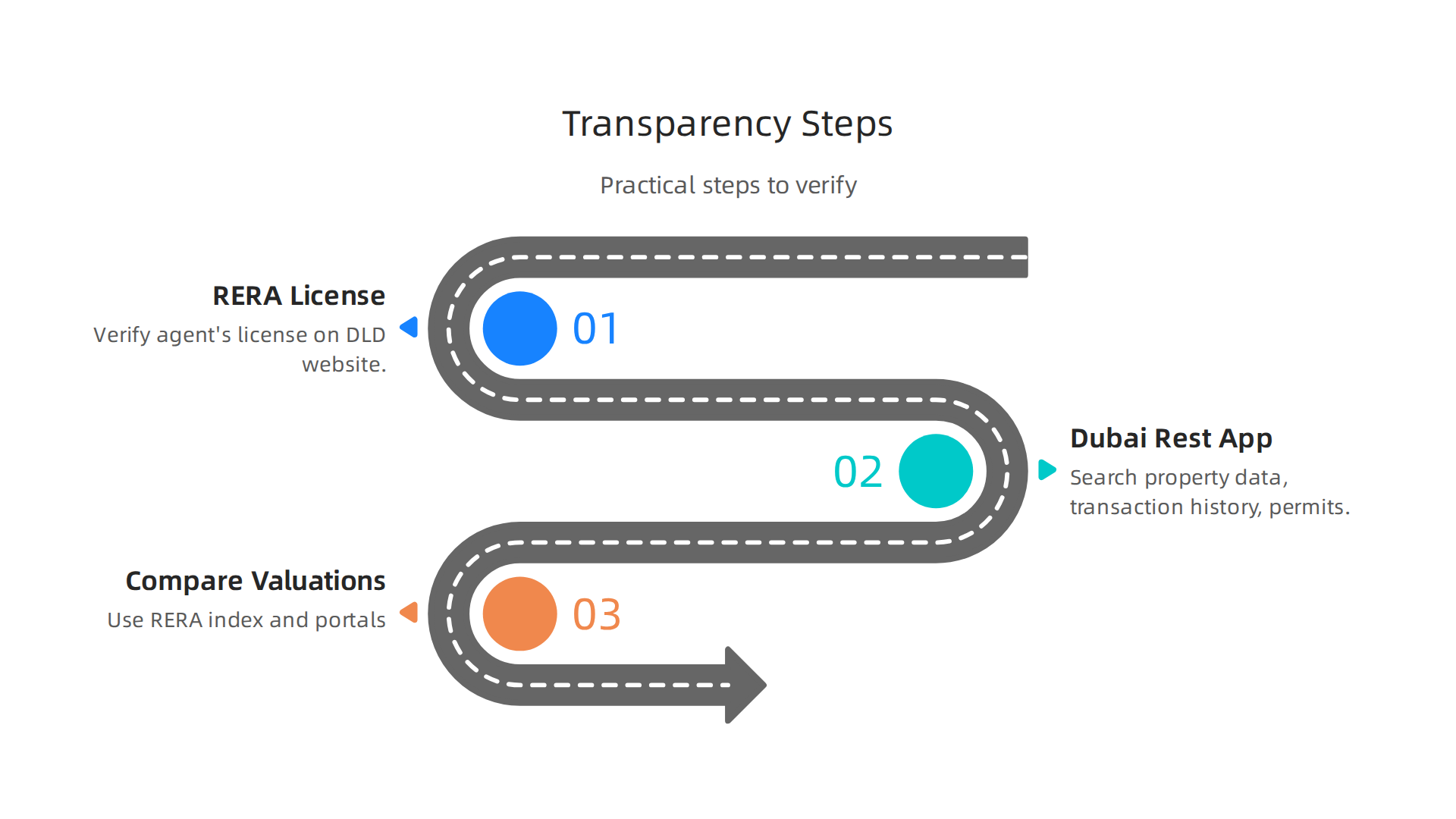
- Check the agent’s RERA license number. Every registered agent in Dubai has a license. Ask for it. Then verify it on the DLD website or the Dubai Rest app. If they cannot provide it, walk away.
- Use the Dubai Rest App. This official app lets you search property data, see transaction history, and check if a developer has permits. It puts real information in your hands.
- Compare valuations. Do not trust one agent’s price opinion. Use the RERA index and look at recent sales of similar properties on trusted portals.
When you verify this way, you remove the guesswork. You make decisions based on facts, not promises.
Learning how to spot a trustworthy agent is a big part of this process. For a deeper look at what makes a legitimate agent and how their licensing works, read our guide on how to become a real estate agent in Dubai in 2026. It gives you the inside view of professional standards in the dubai uae real estate market.
Dubai Real Estate Laws and RERA Regulations: A 2026 Compliance Checklist
Now that you know how to spot a trustworthy agent and verify basic data, let’s talk about the legal backbone that makes all of that possible. Dubai’s real estate laws in 2026 are built for your protection, but only if you understand them and follow the rules. Skipping a step here can cost you big time.
The foundation of everything is Law No. 7 of 2006, which governs property ownership in Dubai. On top of that, RERA’s Oqood system registers off-plan sales so your purchase is tracked from day one. The Dubai Land Department (DLD) oversees these rules to keep the market fair. And in 2026, new amendments to the strata law have tightened rules for shared ownership in buildings, like apartments and villas in communities. This matters for your real estate investment in dubai because it affects maintenance fees and your rights as an owner. A guide from Betterhomes explains how RERA sets guidelines to protect buyers, sellers, and renters Source: Betterhomes.
So here is your compliance checklist for 2026:
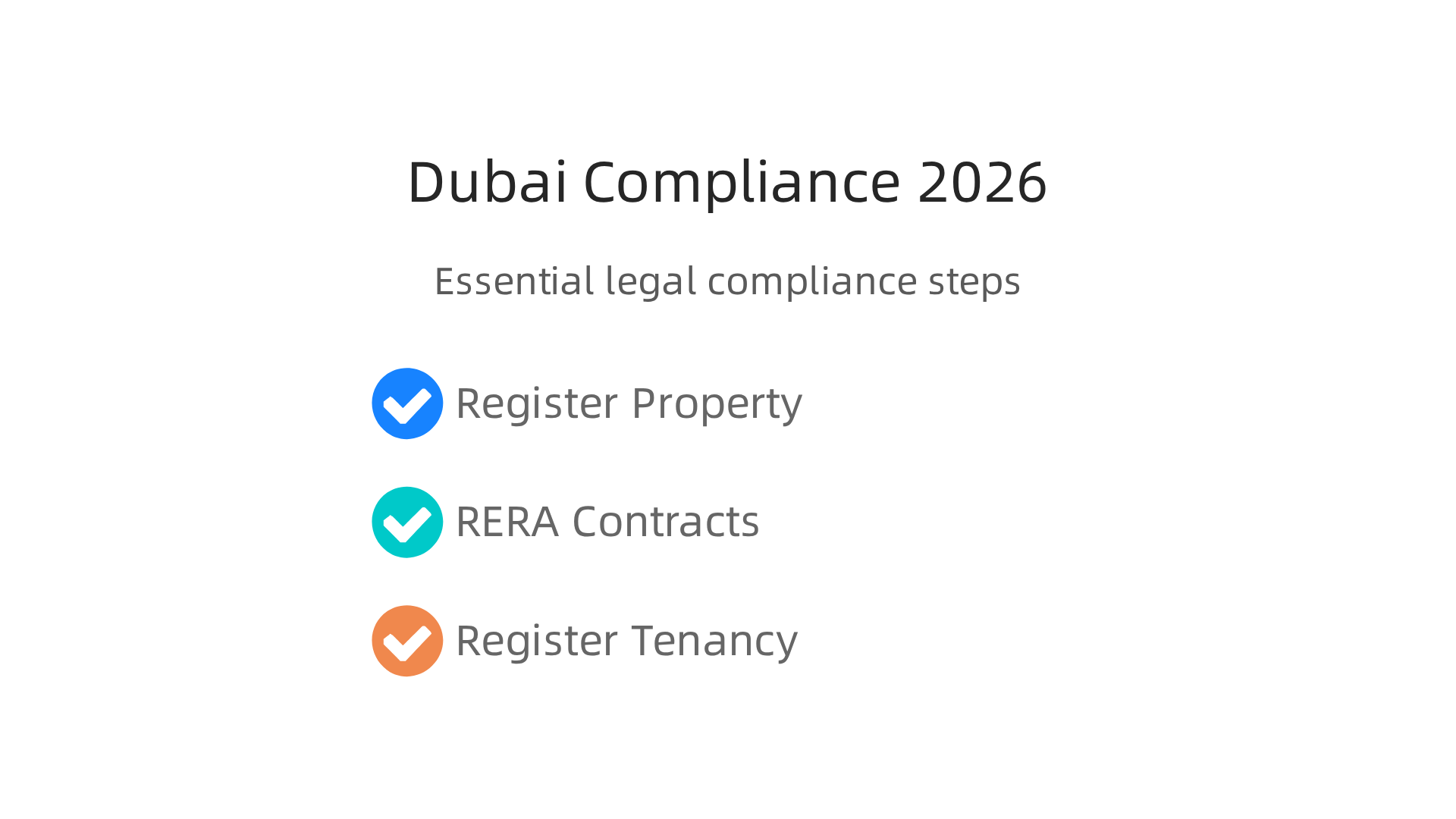
- Register the property with DLD. No registration means no legal ownership. Period.
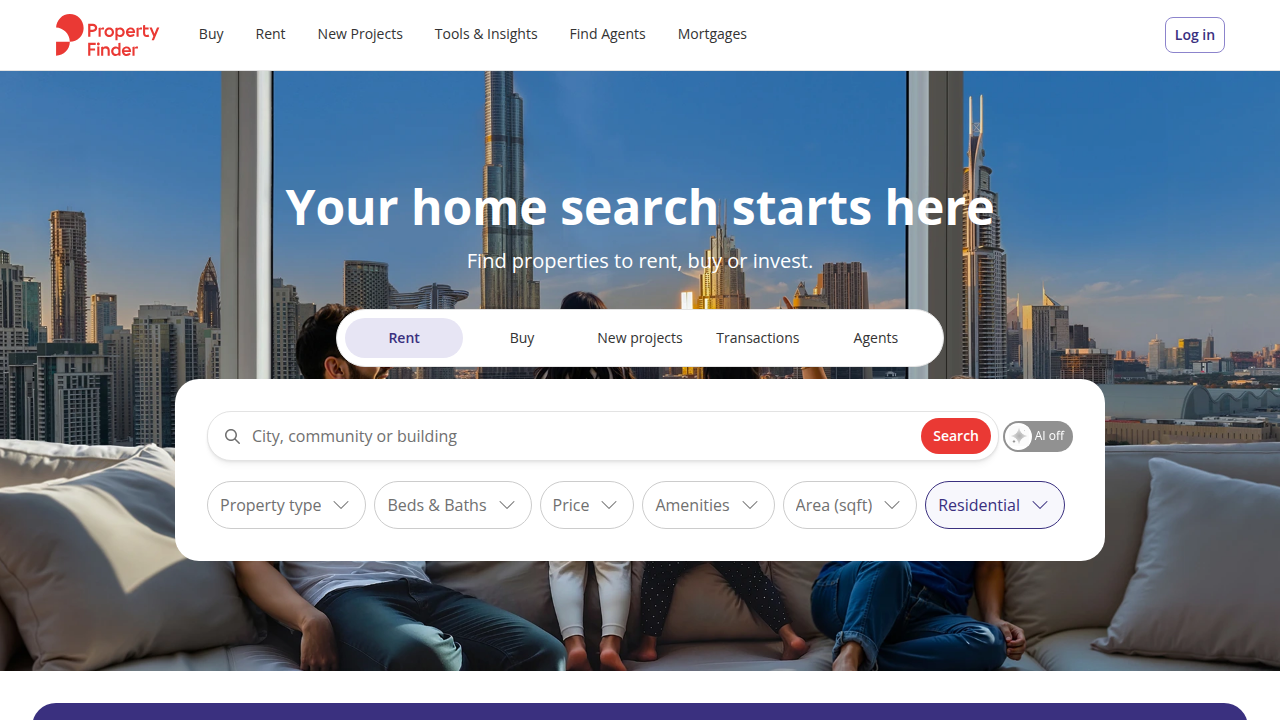
- Use the correct RERA contract forms. For sales, this means Form A (for direct sales) or Form F (for off-plan). These standard forms protect both sides. The Property Finder guide walks you through how these forms work
- Register your tenancy contract with Ejari. If you plan to rent out your property, the Ejari system is mandatory. It formalizes the lease and protects your rights as a landlord. A guide on tenancy laws emphasizes that this step is non-negotiable Source: Mamtu Mirchandani.
What happens if you skip these steps? Non-compliance can lead to fines, your contract being declared void, or even losing your ownership rights. The DLD itself publishes the full set of regulations, including new rules against cold calling, so you can see exactly what is required
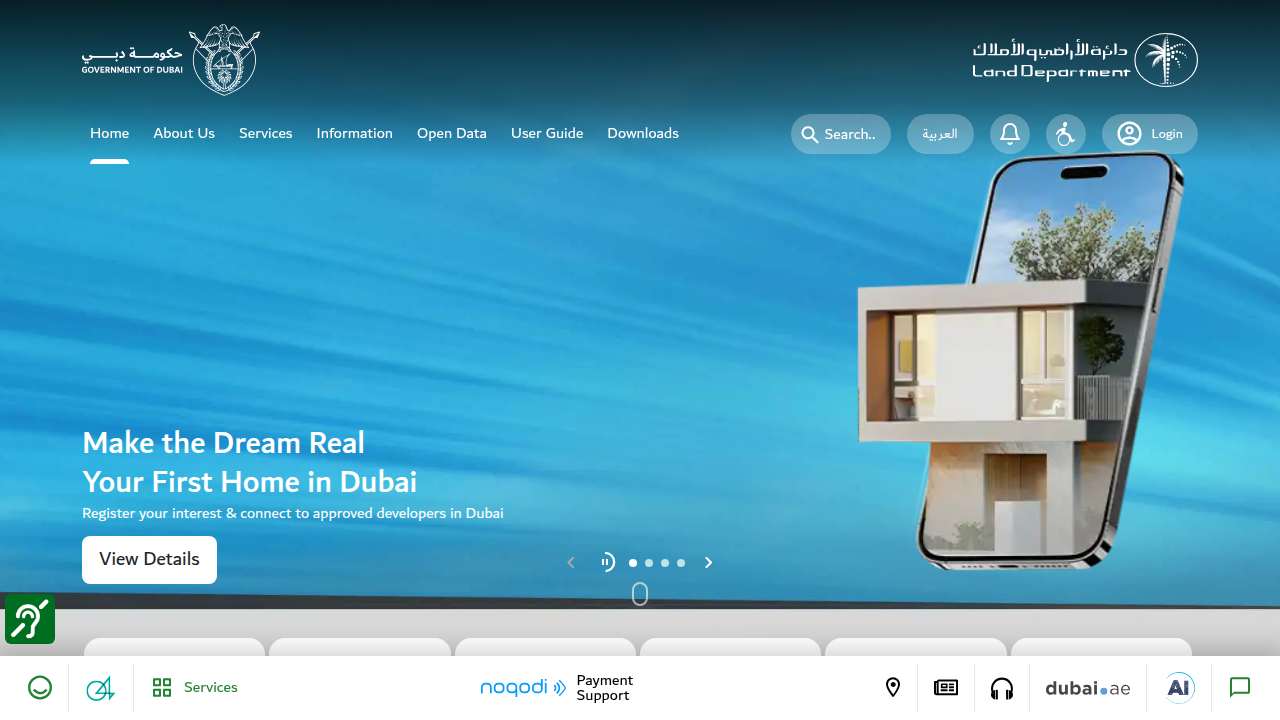
Source: Dubai Land Department.
Following this checklist is the smartest way to protect your real estate investments in dubai. For a complete walkthrough of the entire buying process from start to finish, check out our step-by-step guide on how to buy property in Dubai in 2026. It covers every document, fee, and form you need.
Top Dubai Property Investment Hotspots in 2026: Data-Backed Neighborhoods for Capital Growth and Rental Yield
Following the rules is just step one. The next big question is: where should you actually put your money?

In 2026, the real estate Dubai UAE market is not a blanket success story. Different neighborhoods are performing very differently. According to market experts, growth has slowed to a more sustainable pace compared to the double-digit surges of previous years (Source: Engel & Völkers). But smart buyers know this is a good thing. It means data matters more than hype.
The best neighborhoods in 2026 share one thing: strong fundamentals. They have growing populations, new infrastructure, and limited supply. Here are three top picks.
Dubai South
This area is getting a lot of attention in 2026. It sits near the new Al Maktoum International Airport. The whole district is being built for the future. Analysts point to strong rental yields here because demand from workers and businesses is rising fast (Source: Khaleej Times). With new infrastructure coming online, this area is a top pick for investors focused on long-term growth.
Jumeirah Village Circle (JVC)
JVC is a favorite for investors who want steady rental income. It has a high number of affordable apartments and townhouses. Families love the community feel. Rental yields in JVC often beat the city average. And with new schools and shops opening, capital growth looks promising too. The area benefits from high occupancy rates, which keeps rental income stable through the year.
Dubai Creek Harbour
This is the up-and-coming luxury spot. It is often called the new Downtown. The centerpiece is the Dubai Creek Tower. Prices here are higher, but many forecast strong long-term appreciation (Source: Sands of Wealth). For investors with a bigger budget, this area offers a mix of high capital growth and solid rental demand.
What About Visas and Ownership Rules?
Your choice of neighborhood also depends on whether you can buy there as a foreigner. Dubai has freehold areas open to anyone and leasehold areas with restrictions. On top of that, visa rules tie directly to your Dubai real estate investment. A property worth AED 1 million qualifies you for a 2-year visa. Spend AED 2 million or more, and you can apply for the 10-year Golden Visa. This makes real estate investment in Dubai even more attractive for international buyers.
For a complete breakdown of every step in the buying process, check out our full step-by-step guide on how to buy property in Dubai in 2026.
How to Evaluate a Dubai Real Estate Agent: Credentials, Track Record, and Red Flags
You found the perfect neighborhood. You know your budget. Now comes the tricky part: finding an agent you can trust. In the real estate Dubai UAE market, not every agent is created equal. The good news is that Dubai has strong rules to protect buyers. You just need to know what to look for.
First, Check Their Credentials
Every licensed agent in Dubai must hold a valid RERA registration card. This card has a unique BRN number (Broker Registration Number). The RERA license comes from completing a training course through the Dubai Real Estate Institute (DREI) and passing a government exam. You can verify an agent’s card directly on the Dubai Land Department website or through the RERA public register. If an agent cannot show you their card or gives you a vague excuse, that is a major warning sign.
Watch for These Red Flags
Some agents use high-pressure tactics to close deals fast. Here are three big red flags to avoid:
- Upfront fees. A legitimate agent earns commission only after a sale or lease. Never pay a fee just to work with them.
- Guaranteed returns. No one can promise future rental yields or capital gains. If an agent guarantees a specific percentage, they are misleading you.
- No written market comparison. A good agent will always provide a written comparable market analysis (CMA) showing recent sales and rents in the area. If they skip this step, they are not doing their job.
How to Vet an Agent Thoroughly
Do not rely on a friendly conversation alone. Ask for references from at least two recent transactions. Contact those buyers or sellers and ask about their experience. Check online testimonials on Google or property portals. And always verify the agent’s license using the official RERA system. This simple step protects your real estate investment in Dubai from fraud or poor advice.
For a complete walkthrough of the entire buying journey, including how to choose the right agent, check out our detailed step-by-step guide on how to buy property in Dubai in 2026. It covers every document, fee, and milestone you will encounter.
Building a Diversified Real Estate Portfolio in Dubai: Strategies for UAE-Focused Investors
Once you have found a trustworthy agent, the next step is building a portfolio that can weather market ups and downs. In 2026, the Dubai property market is entering a phase of slower but more sustainable growth, according to an analysis of the Dubai housing market by Engel & Völkers. This makes diversification more important than ever. You do not want all your money in one type of property or one neighborhood.
Spread Your Investments Across Asset Types
A balanced real estate investment in Dubai includes a mix of property types:
- Residential units like apartments and villas for steady rental income
- Commercial spaces such as offices or retail shops for higher yields
- Off-plan vs. ready properties. Off-plan deals can offer lower entry prices and capital appreciation. Ready properties give you immediate rental cash flow.
Land scarcity is a key driver in prime areas right now, says a recent report from Khaleej Times. That means demand in established neighborhoods like Palm Jumeirah or Downtown Dubai stays strong. But emerging areas can offer better entry prices and growth potential. Diversifying across geographies protects you if one area cools off.
Choose Your Strategy
Here are three common approaches for real estate investments in Dubai:
- Buy and hold for rental income. This works well in areas with low vacancy rates. Industry forecasts show Dubai’s average vacancy rate at around 12% in 2026, with seasonal variation, according to Gulf News. Pick properties in high-demand zones to keep your units leased.
- Fix and flip for capital gains. This strategy needs a strong understanding of renovation costs and market timing. With price growth slowing from double-digit surges, as noted by Sands Of Wealth, flipping requires careful math.
- Use offshore companies for asset protection. Holding property through a company can simplify inheritance and protect your privacy. This is common among foreign investors.
Use Leverage Carefully
Mortgages can help you buy more property, but Dubai has strict caps. You can usually borrow up to 75% of the property value for expats and 80% for UAE nationals. Interest rates in 2026 are still a factor. Overleveraging in a slower market can squeeze your cash flow. Keep loan-to-value ratios comfortable, especially on investment properties that depend on rent to cover payments.
For a full breakdown of every step in the buying process, including how to structure your first purchase, read our complete guide on how to buy property in Dubai in 2026. It covers documents, fees, and milestones you will face.
Financing Options for Dubai Property Investments: Mortgage, Cash, and Creative Funding
Once you have a diversification plan, you need to figure out how to pay for it. Your financing choice can make or break your returns. Here is what you need to know about your options for Dubai real estate investment in 2026.
Mortgage Options for Every Buyer Type
Dubai has clear loan rules based on who you are and which property you are buying.
| Buyer Type | Maximum LTV (First Property) | Second Property |
|---|---|---|
| UAE Nationals | Up to 80% | Lower limits apply |
| Resident Expats | Up to 75% | Around 60% |
| Non-Residents | Up to 60% | Typically 50% |
Non-residents face stricter rules. Most banks ask for a 40-50% down payment and charge interest rates around 4-5%, according to a 2026 guide on Dubai mortgages for non-residents. If you are an expat living in the UAE, banks like Emirates NBD offer loans covering up to 80% of the property value. Loan terms can go up to 25 years.
Make sure you shop around. Compare rates from major lenders like HSBC and check your loan-to-value ratio carefully. A higher LTV means a bigger loan and bigger monthly payments.
Cash Offers Give You Power
Many investors in Dubai UAE real estate choose to pay cash. Why? Sellers love cash buyers. You can close faster and often negotiate a lower price. No bank delays. No interest costs. If you have the funds, cash is your strongest card.
Creative Funding Paths
You don’t always need a bank loan. Here are other ways to fund your real estate investment in Dubai:
- Developer payment plans. Many off-plan projects let you pay in installments during construction. Some developers offer post-handover plans where you pay part of the price after you move in.
- Joint ventures. Partner with another investor to split the cost and the profit. This works well for larger commercial deals.
- Islamic financing (Murabaha). This is a Sharia-compliant option where the bank buys the property and sells it to you at a markup. You pay in fixed installments. Dubai Islamic Bank offers these programs for non-residents too.
Recent Rule Changes to Know
The UAE central bank adjusts mortgage caps from time to time to keep the market stable. In 2026, caps remain tight for second properties. This affects affordability, especially if you plan to buy multiple units. Always check current limits before you apply.
If you are still deciding between property types and locations, read our guide on how to buy an apartment for sale in Palm Jumeirah in 2026. It covers financing specifics for prime areas.
The Property Buying Process in Dubai: Step-by-Step Guide from Offer to Handover
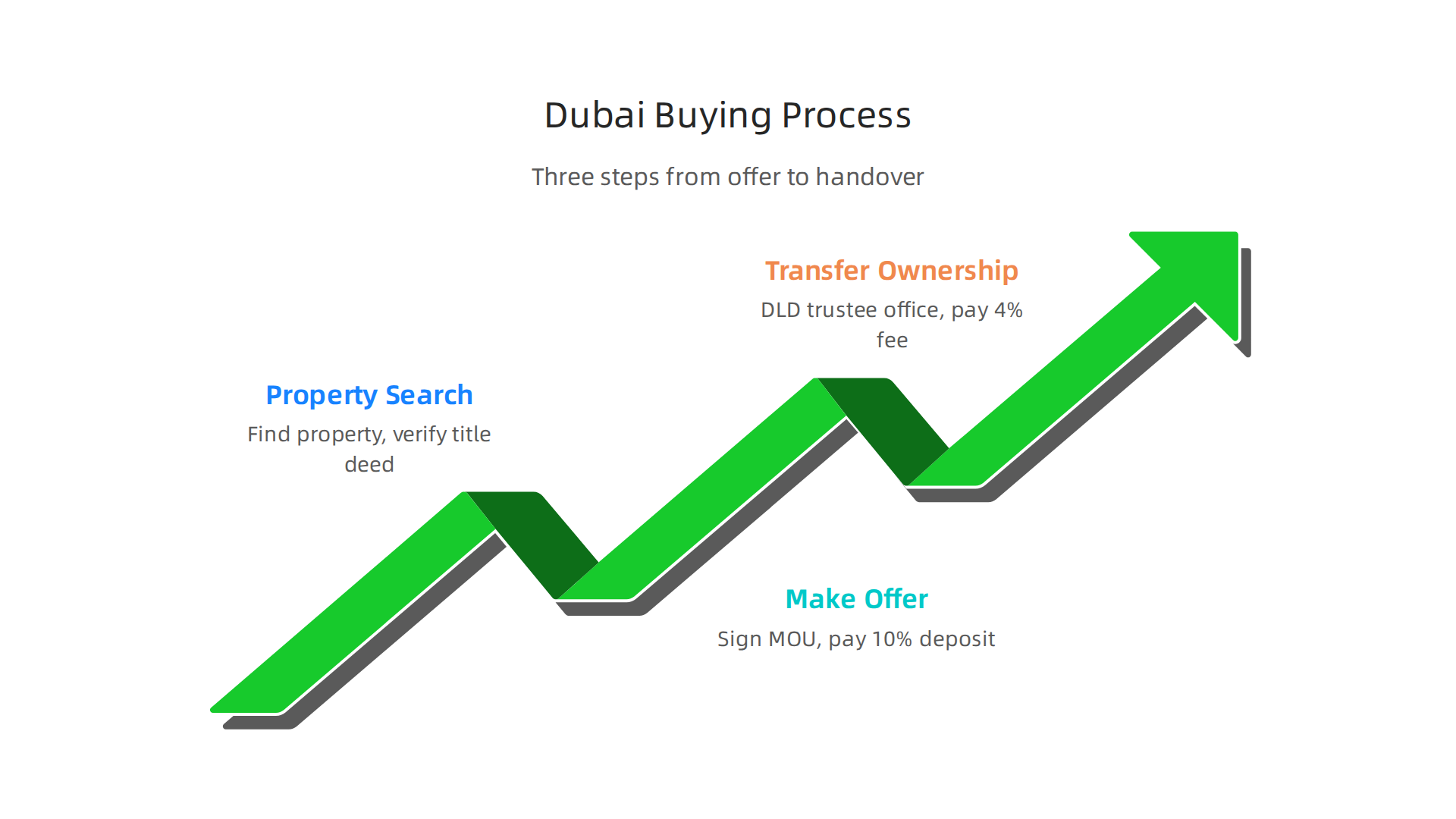
Once you have your financing sorted, it is time to make the purchase happen. The process is straightforward if you know what to expect. Here is how to buy property in Dubai in three clear steps.
Step 1: Property Search and Due Diligence
Start by finding a property that fits your budget and goals. Use trusted portals or work with a licensed agent. Always verify the property before you get serious. You need to check the title deed to confirm the owner is legitimate. Also check for encumbrances like outstanding loans or legal disputes on the property.
Dubai’s Real Estate Regulatory Agency (RERA) requires all agents to hold a valid license. Always ask for their RERA card. You can learn more about what goes into becoming certified by reading the complete guide on the RERA exam to become a Dubai real estate agent. A licensed agent helps protect you during due diligence.
Step 2: Making an Offer and Signing the MOU
When you find the right property, submit a written offer. If the seller accepts, both parties sign a Memorandum of Understanding (MOU), also known as Form F. This document outlines the sale price, payment timeline, and handover date. You will pay a deposit, usually 10% of the price. This deposit shows you are serious. The MOU is legally binding, so read every clause carefully.
Step 3: Transfer of Ownership at the DLD Trustee Office
The final step happens at the Dubai Land Department (DLD) trustee office. Both buyer and seller (or their agents) must be present. You pay the 4% DLD transfer fee on the purchase price. The DLD issues the new title deed in your name. You can complete the entire process online through the official DLD e-services portal. Once you have the title deed, you officially own the property.
For a deeper walkthrough of every stage, read our full step-by-step guide to buying property in Dubai in 2026. It covers documents, costs, and timelines in more detail.
Tax and Legal Considerations for International Investors in Dubai
Now that you know the buying process step by step, it’s time to look at the numbers and rules that really matter for your bottom line. One of the biggest reasons people choose real estate dubai uae is the tax setup. It is very different from most other countries.
Dubai offers a tax environment that is incredibly friendly for property investors. You do not pay property tax. You do not pay capital gains tax when you sell. And there is no inheritance tax either. For 2026, the real estate laws of Dubai confirm there will be no capital gain taxes or property taxes, even with the 5% VAT that applies in certain cases excelproperties.ae/blog/dubai-real-estate-laws-and-regulations. This is a huge advantage for anyone looking at dubai real estate investment.
However, there is one tax you need to know about. Value Added Tax (VAT) at 5% applies on commercial property. If you are buying a shop, office, or warehouse, factor that in. Residential property is currently exempt from VAT.
Legal Structures You Can Use
You have several choices for how you hold your property. Each one offers different benefits for protection and planning.
- Direct ownership in freehold areas: This is the simplest route. As a foreigner, you can own the property outright in designated freehold zones like Palm Jumeirah. If you are interested in a specific area, check our guide to buying an apartment for sale in Palm Jumeirah in 2026. It covers the process and costs.
- UAE company (LLC or Free Zone company): This is common for investors who want to separate personal and business assets. It can also help with inheritance planning.
- Offshore company: Some investors use offshore structures for privacy and asset protection. This is usually for larger portfolios.
Double Tax Treaties and Your Home Country
Here is something many investors forget. Your home country may tax your worldwide income. So even if Dubai does not tax your rental income or capital gain, your home country might. The UAE has double tax treaties with many nations. These can help you avoid being taxed twice on the same money. Always check with a tax professional in your home country before you invest.

The regulatory environment in Dubai is well-structured. The Dubai Land Department and RERA oversee the market to ensure transparency and investor protection engelvoelkers.com/ae/en/resources/dubai-real-estate-laws-and-regulations. This framework makes real estate investments in dubai safer than many other international markets.
In short, the tax advantages are real. But the legal structure you choose and your home country’s tax rules are just as important for a successful real estate investment in dubai. Get the right advice before you commit.
Summary
This article is a practical guide to buying and investing in Dubai real estate in 2026, focused on cutting through the noise so you can act with confidence. It explains why transparency matters, how to use RERA, DLD and the Dubai Rest app to verify agents and listings, and gives a clear compliance checklist (contracts, registration, Ejari). The guide highlights top neighborhoods—Dubai South, JVC, and Dubai Creek Harbour—while linking location choice to visa and ownership rules. You’ll learn how to vet agents, spot red flags, structure a diversified portfolio across asset types, and compare financing options including mortgage LTVs, cash, developer plans and Islamic finance. The article also walks through the buying steps from search to DLD transfer and summarizes tax and legal considerations for international buyers so you know what fees, taxes, and ownership structures to expect.